

Last Updated: November 14, 2026
Quick Summary
To choose a first aid course in Nepean, start with your goal: workplace compliance, a healthcare role, family and home, or marine and outdoor use, since each points to a different course level. Then confirm the course is WSIB-approved, check the exact certificate name, and compare format, duration, price, and location before you pay.
- Basic First Aid is a one-day course covering CPR, AED use, choking, bleeding, and wound care.
- Intermediate First Aid is a two-day course for higher-risk workplaces and adds injuries, medical emergencies, and poisons.
- BLS is a clinical-level course for healthcare professionals and does not replace a workplace first aid course.
- As of June 22, 2026, the WSIB renamed Emergency First Aid to Basic First Aid and Standard First Aid to Intermediate First Aid.
- Canadian Red Cross certifications for these courses run for three years, so book your renewal before the expiry month.
Table of Contents
- Start With Your Goal: Which First Aid Course Fits
- Workplace First Aid Training Requirements in Ontario
- First Aid Course Duration and Format Compared
- CPR and AED Courses in Nepean: What Level Do You Need
- What to Compare Between Nepean Course Options
- First Aid Recertification in Nepean: Planning Your Renewal
- What Practical Assessment and Certification Involve
- Book Your Nepean First Aid Course With First Aid Plus
- Frequently Asked Questions
Start With Your Goal: Which First Aid Course Fits
The most useful way to choose a first aid course is to start with why you need it, not with the price list. A workplace requirement, a healthcare role, a young family, and a boating hobby each point to a different course level, and picking the wrong one means paying twice.
A common pattern in first aid training is that people book the cheapest option, then discover their employer or regulator wanted something else. So before you compare dates or prices, work out which of these four situations describes you.
- Workplace compliance: Basic First Aid or Intermediate First Aid, depending on your workplace's requirements.
- Healthcare or clinical role: Basic Life Support (BLS), which is a separate course from workplace CPR.
- Family and home: Basic First Aid with CPR and AED gives you the essentials in one day.
- Marine and outdoor: specialized training that covers what standard courses leave out.
If you want to see how the Standard First Aid options stack up before committing, our comparison of Standard First Aid course options in Ontario lays them out side by side.
Workplace, Healthcare, Family, or Marine
Basic First Aid is a one-day course covering CPR, AED use, choking, bleeding, and wound care. It suits most general workplaces and anyone who wants solid household skills.
Intermediate First Aid is a two-day course that suits workplaces with higher risk. It adds bone and joint injuries, sudden medical emergencies, environmental illness, and poisons.
BLS is built for nurses, paramedics, and other clinical staff. It is not a workplace first aid course and does not replace one.
Workplace First Aid Training Requirements in Ontario
Workplace first aid training requirements in Ontario are set by the Workplace Safety and Insurance Board (WSIB), and the number of trained staff you need depends on how many people work at a site and how hazardous the work is.
Two changes matter here. First, as of June 22, 2026, the WSIB renamed Emergency First Aid to Basic First Aid and Standard First Aid to Intermediate First Aid (First Aid Program). Certificates issued before that date stay valid until their normal expiry, so nobody needs to retrain early because of the rename.
Second, not every course is WSIB-approved, and the difference is not obvious from a course title. Construction and industrial employers should read our guide to first aid certification for construction workers in Ontario for the site-specific detail.
Verifying WSIB Approval and Certificate Recognition
Ask the provider two direct questions before you pay: is this course WSIB-approved, and what exactly appears on the certificate?
A legitimate certificate names the course, the certification body, the issue date, and the expiry date. Canadian Red Cross certifications for these courses run for three years. If a provider cannot show you a sample certificate or name the approving body, treat that as a warning sign.
First Aid Course Duration and Format Compared
Course duration is where schedules are often misjudged. The Basic First Aid with CPR & AED course is 8 hours in class over one day.
| Course | Format | Price |
|---|---|---|
| Basic First Aid with CPR & AED | In class | $95.00 |
| CPR & AED | In class | $65.00 |
| Intermediate First Aid with CPR & AED | In class | $145.00 |
| Intermediate First Aid with CPR & AED, Blended | Blended | $140.00 |
Price
Blended learning suits people who can study independently and would rather give up one day than two. The in-class portion is where the hands-on practice happens either way. You can see the blended Intermediate First Aid course if that format fits your schedule better.
CPR and AED Courses in Nepean: What Level Do You Need
CPR and AED courses in Nepean come in two distinct levels, and choosing the wrong one is a common and expensive mistake. CPR Level C covers adults, children, and infants and is the standard for most workplaces and families. BLS is the clinical level for healthcare professionals.
A standalone CPR and AED course does not include first aid training. It teaches you to respond to cardiac arrest and choking, not to treat wounds or medical emergencies. If you need both, book a first aid course that bundles CPR, which is how most of our courses are structured.
The CPR and AED course is a standalone option that does not include a first aid component.
- Choose CPR Level C if you are a workplace responder, a parent, a coach, or a caregiver.
- Choose BLS if you work in healthcare or are entering a clinical program.
- Skip both if your employer requires full Intermediate First Aid, since CPR is included there.
What to Compare Between Nepean Course Options
Comparing first aid course options in Nepean comes down to more than price. The useful comparison is a dated, side-by-side view of course level, format, duration, price, location, and whether registration is currently open.
Use this comparison framework for any provider. Confirm each row against the provider's current listing before you register, because dates and prices change.
| What to compare | Why it matters | What to confirm in Nepean |
|---|---|---|
| Course level | Basic First Aid, Intermediate First Aid, BLS, and Marine First Aid are not interchangeable | The exact course name on the certificate matches what your employer or regulator asked for |
| WSIB approval | Not every course title is WSIB-approved | The provider states the course is WSIB-approved and shows a sample certificate |
| Format | In-class versus blended changes your time commitment | Whether the in-class portion is held at a Nepean location or requires travel to Ottawa |
| Duration | One day versus two days affects time off work | Total hours, including any online component |
| Price | Total cost, not headline price | Course fee in CAD, tax confirmed, manual and certification card included or extra |
| Location | Travel and parking add real cost | Street address or neighbourhood in Nepean, plus parking and transit access |
| Registration availability | A course with no open date is not an option this month | Upcoming dates and whether seats are open now |
| Accessibility and language | Not every room or course fits every learner | Accessible training room, language of instruction, and accommodation process |
A transparent total-cost check looks like this:
- Course fee, quoted in CAD with tax confirmed
- Manual or materials included, or extra
- Certification card fee, if any
- Time off work for one day versus two
- Travel and parking to the training location
- Whether CPR Level C is bundled or a separate charge
Watch out: a provider that lists a low price but cannot confirm the Nepean location, the certificate name, or WSIB approval in writing is not a comparable option, no matter how the price looks in a search result.
First Aid Recertification in Nepean: Planning Your Renewal
First aid recertification in Nepean follows a three-year cycle for most Canadian Red Cross certifications. The practical move is to book your renewal before the expiry month, not after, because an expired certificate usually means retaking the full course rather than a shorter renewal.
Put the expiry date in your calendar the day you receive the card, and add a reminder eight weeks before it. Employers running group training should track every employee's date in one place. If your team is spread across several sites, ask the provider whether they can schedule on-site training and manage the certification records for you.
The June 2026 renaming does not change any of this. Certificates issued under the old names remain valid until their normal expiry, and you will receive the new course names when you renew.
What Practical Assessment and Certification Involve
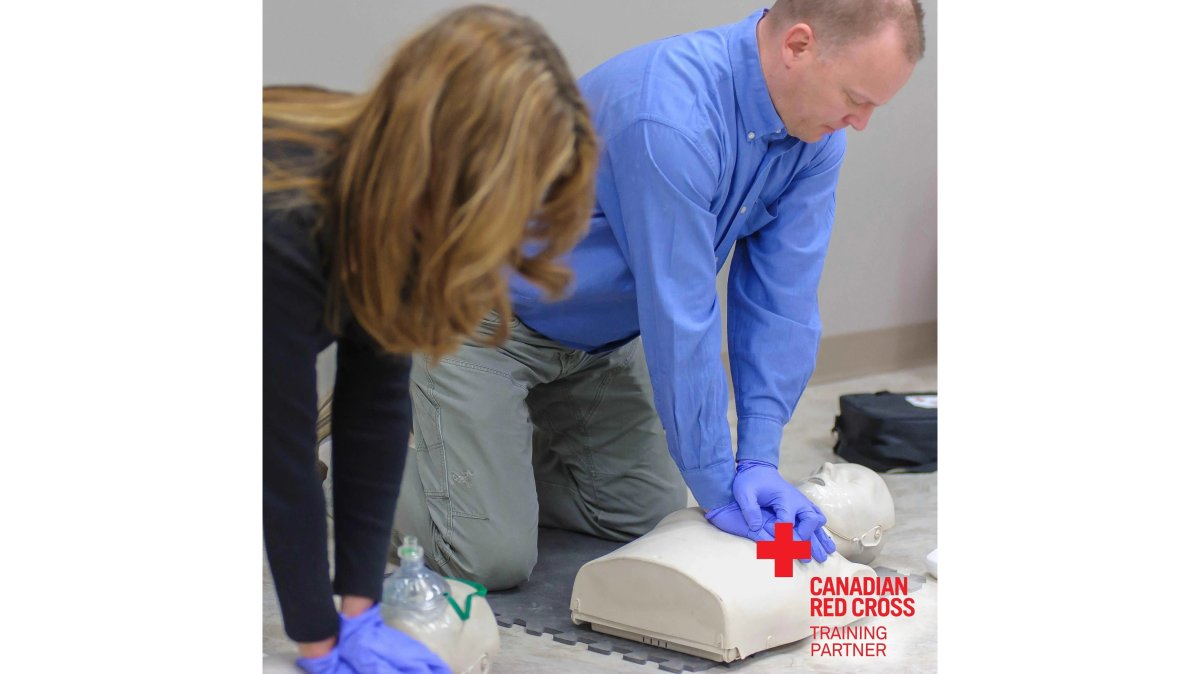
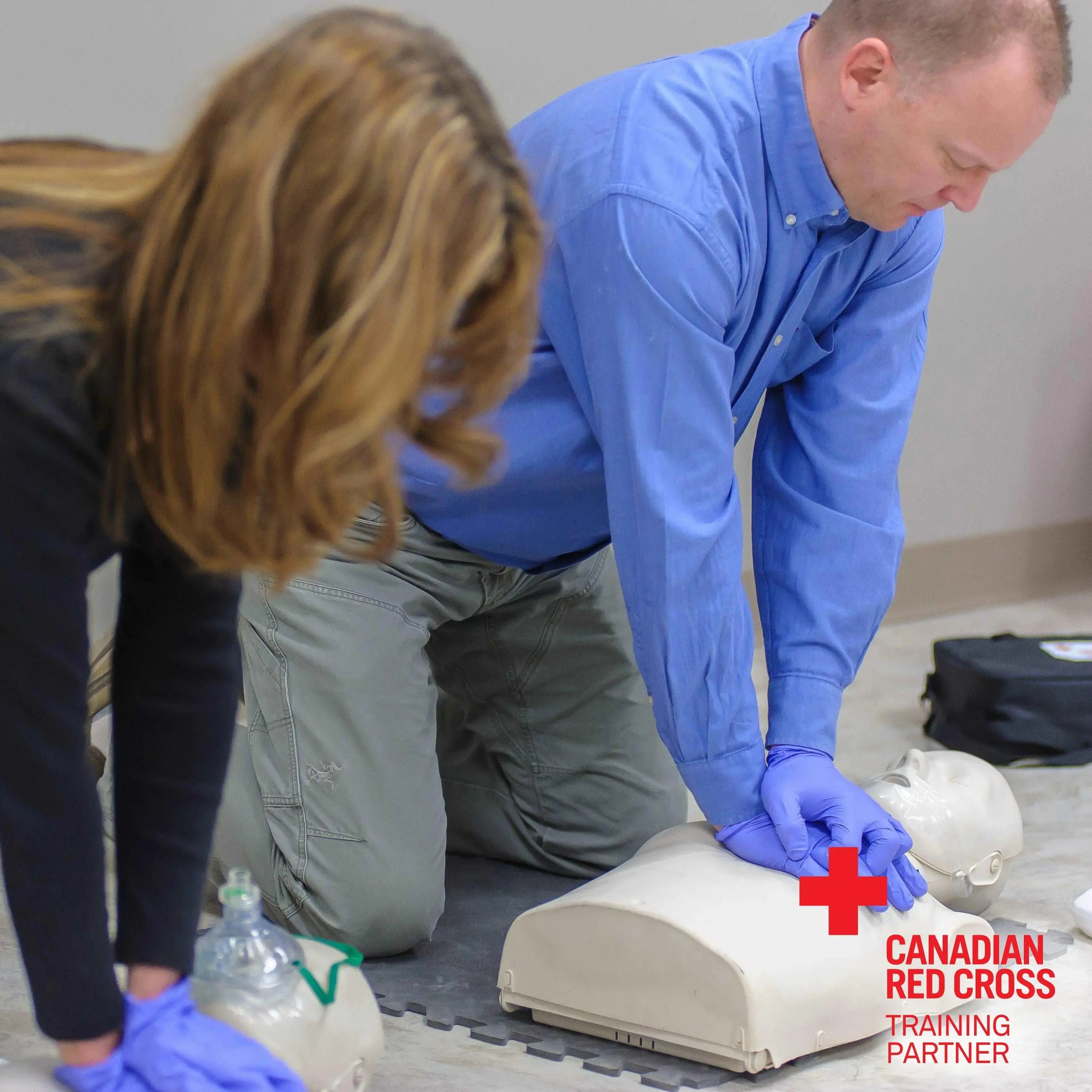
Certification depends on demonstrated skills, not attendance. Courses involve practising compressions, rescue breaths, AED use, choking response, and bandaging while an instructor watches and corrects technique.
Here is what to expect across the main course levels:
- Basic First Aid with CPR and AED: one day of in-class practice covering adult, child, and infant CPR, AED use, choking, bleeding control, and wound care. Assessment is continuous as you practice each skill.
- Intermediate First Aid with CPR and AED: two days of in-class practice that adds bone and joint injuries, sudden medical emergencies, environmental illness, and poisons to the Basic First Aid skills.
- BLS: a clinical-level course focused on high-quality CPR, team resuscitation, and bag-valve-mask use for healthcare professionals. It does not replace a workplace first aid course.
Confirm before you register whether you receive a physical card, a digital certificate, or both, and whether the certificate names the certification body and the expiry date.
Ask the provider what happens if you cannot demonstrate a skill by the end of the day, and whether a re-test is included or charged separately.
Book Your Nepean First Aid Course With First Aid Plus
Choosing well comes down to matching the course to your goal, confirming WSIB approval, and checking the certificate before you pay.
At First Aid Plus, we run WSIB-compliant courses in association with the Canadian Red Cross and Heart & Stroke Foundation. Our courses include CPR Level C at no extra cost, and we hold 310 Google Reviews.
If you are ready to book, you can register for Intermediate First Aid with CPR and AED and pick a date that fits your schedule.
The real risk is not choosing the wrong course. It is putting off the decision until a certificate expires or a workplace audit lands.
Frequently Asked Questions
What is the difference between Standard First Aid and Emergency First Aid?
Standard First Aid runs two days and covers a wider range of emergencies, including bone, muscle and joint injuries, sudden medical emergencies, environmental illness and poisons. Emergency First Aid is a one-day course focused on the essentials: choking, circulation and breathing emergencies, CPR and AED use, and wound care. Under the WSIB naming changes effective June 22, 2026, Emergency First Aid becomes Basic First Aid and Standard First Aid becomes Intermediate First Aid. Certificates issued before that date stay valid until their normal expiry.
How can I check whether a first aid course meets my workplace requirements?
Ask the provider to confirm the course is WSIB approved and that the certificate names the level your workplace needs. The certificate level should match what your workplace is required to have. Keep a copy of the certificate on file and check the expiry date. If you are unsure which level applies to your site, confirm with WSIB or your health and safety advisor before booking.
How long does a first aid course take in Nepean?
Duration depends on the level. Basic First Aid with CPR and AED is 8 hours in class, completed in one day. Intermediate First Aid with CPR and AED is a two-day in-class course. The blended version of Intermediate First Aid combines 8 hours of online learning with 8 hours in person. A standalone CPR and AED course is shorter and covers CPR skills only, without the first aid component.
When should I renew my first aid certification?
Check the expiry date on your certificate and plan your recertification before it passes. If your workplace relies on the certification for compliance, book the renewal a few weeks ahead so there is no gap in coverage. Certificates issued before June 22, 2026 remain valid until their normal expiry, and you renew under the new course names at that point. There is no need to retake training early because of the naming changes.
