

Last Updated: November 24, 2026
Quick Summary
BLS certification requirements for healthcare professionals usually include attending the course, passing a knowledge assessment and demonstrating hands-on skills. Requirements vary by employer and role, so confirm the accepted provider and certificate version with your employer or regulatory college before booking.
- No healthcare background is required to enrol in the full Basic Life Support course.
- Heart and Stroke BLS certificates expire one year after issue, so book renewal before expiry.
- A lapsed certificate usually means taking the full course rather than the renewal course.
- The course covers adult, child and infant rescue techniques, which matter for many workplaces.
- Confirm which parts are online and which skills must be shown in person before you book.
Table of Contents
- What Are the BLS Certification Requirements for Healthcare Professionals?
- Who Needs BLS Certification in Ontario?
- BLS Certification Prerequisites: Do You Need a Healthcare Background?
- How Long Does a BLS Course Take?
- BLS Renewal for Healthcare Professionals: When and How to Recertify
- BLS Course Options and Costs at First Aid Plus
- Booking Your BLS Course in Nepean and What to Bring
- Frequently Asked Questions
What Are the BLS Certification Requirements for Healthcare Professionals?
Basic Life Support (BLS) certification is a recognized training credential that teaches healthcare providers to recognize cardiac arrest, perform high-quality CPR, deliver ventilations and use an automated external defibrillator (AED), and understanding the BLS certification requirements is the first step toward meeting them (Learn about CPR & AEDs). Many healthcare employers ask for it as a condition of employment or clinical placement. At First Aid Plus, we deliver the Basic Life Support course developed by the Heart and Stroke Foundation of Canada. (Source: College of Nurses of Ontario professional standards)
The core requirements are straightforward. Participants typically attend the course, complete a knowledge assessment and demonstrate hands-on skills. Heart and Stroke BLS courses cover adult, child and infant rescue techniques, so learners build confidence across every patient group. Check with your employer or regulatory body for the exact certificate version they accept, because acceptance can differ by role and by workplace.
A BLS certificate is the document that proves completion of a current BLS course. Employers often ask to see it and track its expiry date.
Who Needs BLS Certification in Ontario?
Ontario employers may ask for BLS certification from staff who provide direct patient care or respond to emergencies. If you are unsure which CPR-related certification applies to your role, you can compare CPR-A, CPR-C and BLS in more depth. The exact requirement depends on the employer, the role and any professional regulator involved, so the list below is a guide rather than a legal rule. Confirm your own obligations with your employer or the relevant college.
Healthcare Roles and Workplaces That Require BLS
Common roles that are asked to hold BLS certification include:
- Hospital and clinic nursing staff
- Personal support workers and home care providers
- Paramedics and other pre-hospital responders
- Dental and dental hygiene teams
- Medical office and long-term care staff who assist during emergencies
- Students entering a healthcare-related training program
Recertification is usually needed on a regular cycle, so it helps to record your certificate's issue and expiry dates as soon as you receive it. If your role also needs advanced pediatric recertification, you can book PALS recertification directly once you know your renewal timing.
Nurses, Paramedics and Other Regulated Professionals
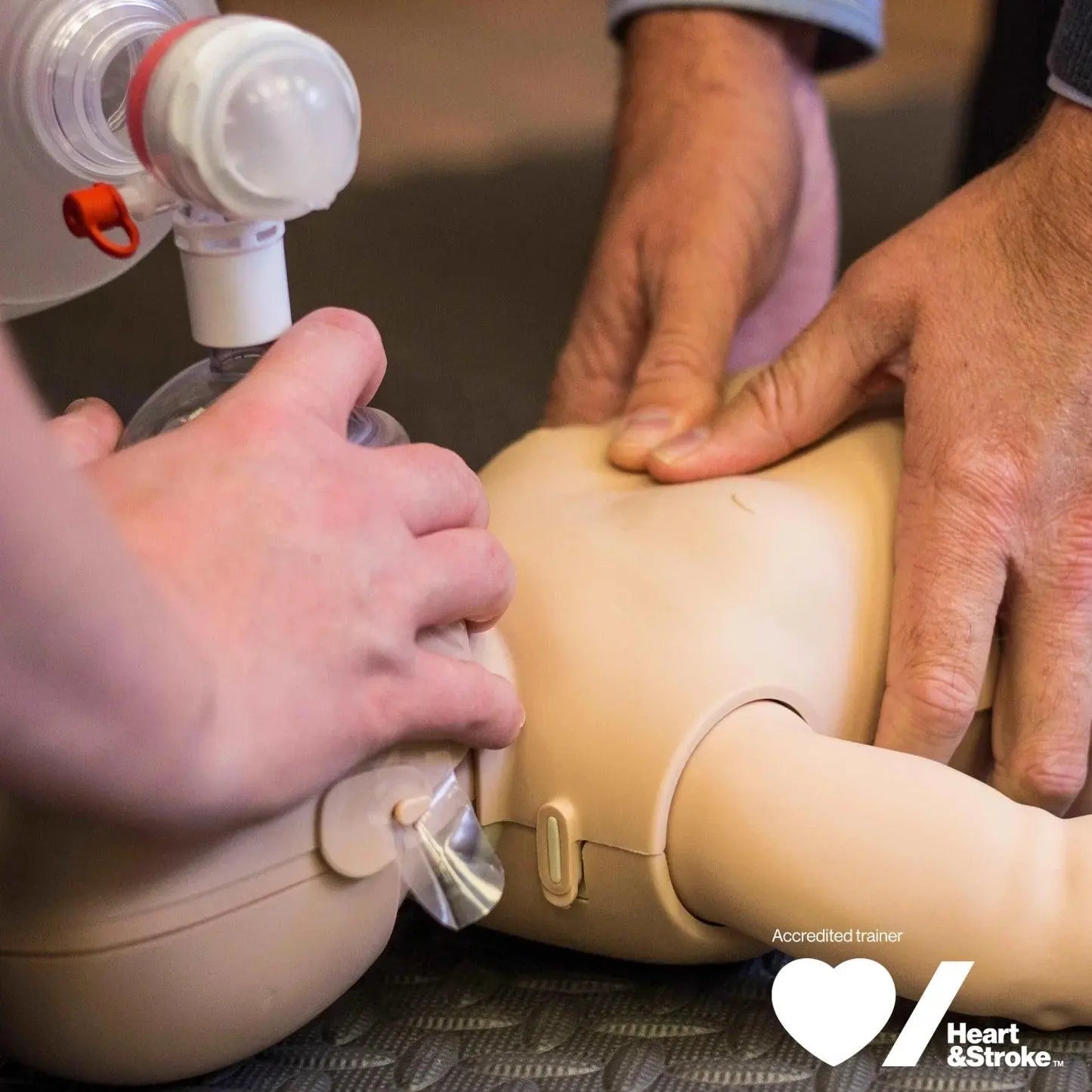
Regulated professionals such as nurses and paramedics usually need BLS as part of their professional practice expectations, and their regulatory college or employer sets the specific standard. Because those standards are set by the college and the employer, verify the current requirement with the body that licenses you before you enrol.
How Acceptance Differs by Role: What to Confirm Before You Book
Before you book, confirm with your employer or regulatory college which provider they accept, which certificate version they require, and whether they accept a blended course where part of the learning is online.
Requirements vary by role and workplace. Check with your regulatory college, employer, agency or placement office to confirm which provider and certificate they accept.
Confirm the age groups your workplace expects the certificate to cover before you book. The Heart and Stroke BLS course includes adult, child and infant rescue techniques.
BLS Certification Prerequisites: Do You Need a Healthcare Background?
The full Basic Life Support course has no prerequisites, so a healthcare background is not required to enrol. The course is designed for in-facility and pre-hospital care providers and first responders, and it also serves people who need BLS certification to enter a healthcare-related training program.
Recertification is different. Learners renewing an existing Heart and Stroke BLS Provider certificate must hold a current certificate that is about to expire; a lapsed certificate means taking the full course instead. Bring your existing certificate to the class if you are renewing.
A Practical Requirements Checklist for Nepean Healthcare Professionals
Use this checklist to review what a BLS course involves before you book.
-
Prerequisites: No healthcare background is required for the full course. For renewal, you generally need a current certificate that is close to expiry; a lapsed certificate usually routes you to the full course.
-
Skills testing: You will demonstrate adult, child and infant compressions, ventilations, AED use and team response to the instructor's satisfaction. Practice before the assessment rather than treating it as a formality.
-
Renewal timing: Heart and Stroke BLS certificates expire one year after issue. Set a reminder well before the expiry date.
-
Course format: Confirm whether any portion is online and which hands-on skills must be demonstrated in person.
Blended Learning and Online-Course Limitations
Confirm exactly which components of any course are online and which are in person, and check that your employer or regulator accepts the format you choose.
Renewal Planning and Expired Certification
Because BLS certificates expire one year after issue, book your renewal before the expiry date. If your certificate has already expired, plan for the full BLS Provider course instead of the renewal course. Keep a copy of your certificate and its expiry date on file so you can show compliance to your employer without a gap.
How Long Does a BLS Course Take?
Confirm the course schedule and length when you book. Hands-on practice is where learners build confidence.
What Is Covered in the Course: Adult, Child and Infant CPR, AED and Airway Skills
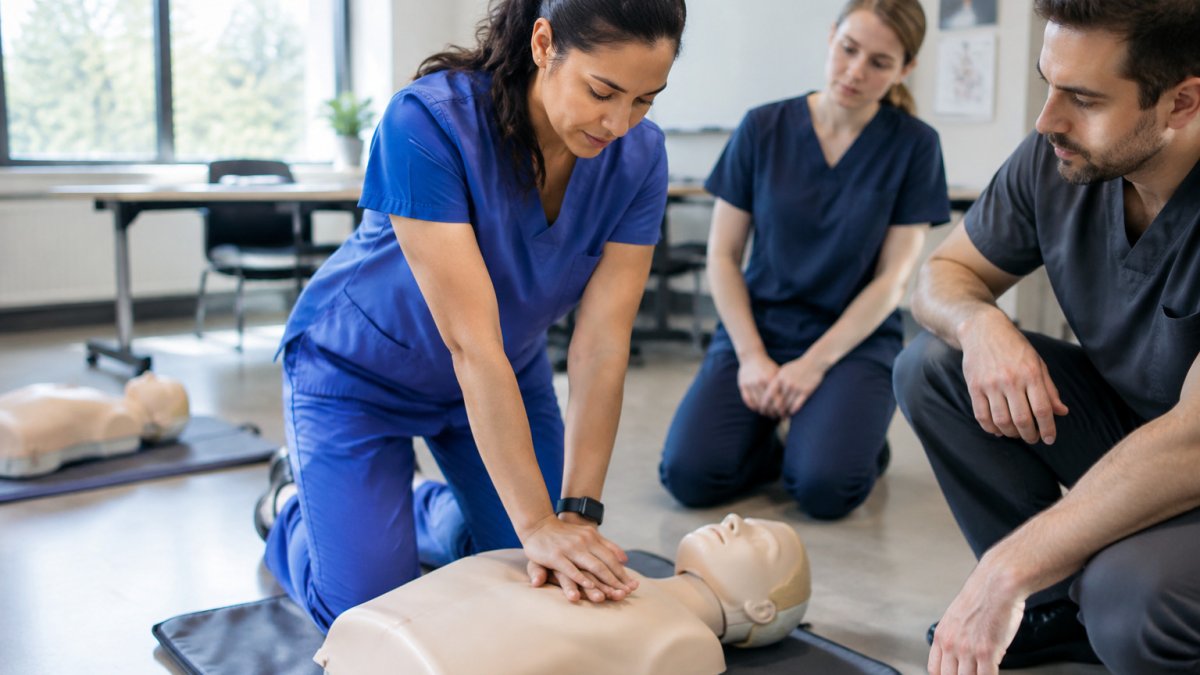
The course teaches participants to recognize life-threatening emergencies, perform high-quality chest compressions, deliver appropriate ventilations and use rapid defibrillation (Learn about CPR & AEDs). It also covers how to respond to choking emergencies and how to work as part of a team in both single-rescuer and multi-rescuer situations. Learners practise adult, child and infant techniques, which matters because a certificate that covers only one age group may not satisfy every workplace.
Review the course material before the written assessment rather than relying on the hands-on portion alone.
BLS Renewal for Healthcare Professionals: When and How to Recertify
Heart and Stroke BLS certificates expire one year after issue, so set a reminder well before the expiry date and book the renewal course early.
What to Do If Your BLS Certificate Has Already Expired
If your certificate has already expired, you generally must take the full BLS Provider course rather than the renewal course. The renewal route is available only while a certificate is still current. A lapsed certificate may require the BLS Renewal Prerequisite Challenge, a short online assessment, before attending the renewal course. Check the course requirements before you book, because the eligible route depends on your certificate's status on the day you enrol.
BLS Course Options and Costs at First Aid Plus
At First Aid Plus, the full Basic Life Support course is listed at $65.00 CAD, and the renewal course for learners with a current certificate is listed at $55.00 CAD. Our Thunder Bay sessions are listed at $75.00 CAD for the full course and $70.00 CAD for renewal. Confirm the current price on the course page before you book.
You can review the full course details, including what is included and the prerequisites for each option, on the Basic Life Support Course (BLS) page before you choose a session. The 2020 BLS Reference Card, listed at $14.50 CAD, is a useful companion for in-class and workplace reference.
| Option | Who It Suits | Listed Price (CAD) |
|---|---|---|
| Basic Life Support Course (BLS) | New learners and those with an expired certificate | $65.00 |
| BLS Recertification | Learners with a current certificate about to expire | $55.00 |
| BLS Course, Thunder Bay | Learners based in Thunder Bay, full course | $75.00 |
| BLS Recertification, Thunder Bay | Thunder Bay learners renewing a current certificate | $70.00 |
Listed Price (CAD)
Booking Your BLS Course in Nepean and What to Bring
If you are based in Nepean, start by confirming the session date and the course type that matches your certificate status. Choosing the right route on booking saves you from being turned away at the door.
Bring your existing certificate if you are renewing, whether it is a printed copy or a digital one. Wear comfortable clothing that lets you kneel and move on the floor, and bring your identification so that your certificate records match your legal name.
Comparing other workplace safety training options in the area can also help you plan your professional development, and you can review them on the Top 7 Workplace Safety Training Programs in Nepean guide.
Once you have your certificate, keep a record of its expiry date and renew before it lapses. If your role also requires advanced recertification, the Advanced Cardiac Life Support Acls Recertification course is one option to consider, and our team at First Aid Plus can help you choose the right route for your next renewal.
Frequently Asked Questions
Who needs BLS certification in Ontario?
BLS certification is commonly held by healthcare providers whose roles involve patient care. Requirements differ between employers and regulatory bodies. Requirements differ between employers and regulatory bodies, so confirm with your employer or licensing body which certification they accept. Check their written policy before enrolling in a course.
What are the BLS certification prerequisites for a healthcare professional?
The Heart and Stroke Foundation Basic Life Support course has no formal prerequisites for new providers, so you can enrol without prior CPR training. Renewal courses have stricter requirements: you must hold a current Heart and Stroke BLS Provider certificate that is about to expire, and you must bring a printed or digital copy of it to class. If your certificate has already expired, you must take the full BLS Provider course or complete the BLS Renewal Prerequisite Challenge before attending the renewal course.
How long does a BLS course take?
The BLS Provider course is a hands-on, in-person class that covers high-quality CPR, choking response, AED use and team-based resuscitation for adults, children and infants. Course length depends on the training centre and class format, so confirm the schedule when you book. The renewal course is designed for experienced providers who use BLS skills regularly. Both courses include skills practice.
How often do healthcare professionals need to renew BLS certification?
Heart and Stroke BLS Provider certification expires one year to the day after it is issued, so healthcare professionals must renew it annually. Renewal requires a current certificate that has not yet expired, which you must bring to the renewal class. If the certificate has already lapsed, you will need to repeat the full BLS Provider course instead. Set a reminder for your expiry date so you can book a renewal before your certificate lapses.
What skills are covered in a BLS course?
A BLS course teaches you to recognise life-threatening emergencies, perform high-quality chest compressions, deliver effective ventilations and use an automated external defibrillator quickly. It includes adult, child and infant rescue techniques, so you can respond to patients of any age. You also learn how to respond to choking emergencies and how to work as part of a team in both single-rescuer and multi-rescuer situations. Practice on manikins builds the confidence needed for real emergencies.
What should I bring to a BLS course?
Bring photo identification and, if you are taking a renewal course, your current Heart and Stroke BLS Provider certificate in printed or digital form. Renewal candidates whose certificate has expired must complete the required prerequisite first, so check your status before the class date. Wear comfortable clothing that allows you to kneel and move freely during hands-on practice. If you have a course manual or reference card, bring it along for reference during the session.
